Thursday, June 25, 2020

Monique Eckerd, Research Operations Manager at Appalachian State University Completes NC Environmental Education Certification.

Monique Eckerd, Research Operations Manager at Appalachian State University, recently completed her NC Environmental Education Certification.

Monique, who is also a Board Member with the Watauga Humane Society, an avid hiker, and gardener says the certification program gave her the tools to teach more informed camps as a volunteer with the Humane Society. She also enjoyed meeting other environmental educators and making new friends.

For Monique’s community partnership project, she rebuilt and enhanced the Watauga Humane Society Walking Trails. The Humane Society sits on a 13-acre tract of land in southern Watauga County which includes several acres of walking trails behind the main shelter building which are open to the public and until the initiation of this project were poorly maintained and marked. The walking trails wind through a stand of established woods with native tree species including maples, oaks, black gum, Frazier fur, white pine, and Frazier magnolia. The walking trails are rich with understory species such as rhododendron, and mountain laurel and smaller plants such as Jack-in-the-Pulpit, ferns, running cedar, and turkey’s beard which cover the woods floor.

Working in partnership with Grace Evangelical Lutheran Church, Camp Cats and Canines, Gear Up, Appalachian State student volunteers and community volunteers, she was able to raise awareness of the resources and advantages of well-maintained trails for community use, engage volunteer groups in the establishment of a pollinator garden at the trail entrance and to educate volunteers on the importance of pollinators in the environment.

Monique says the trails are more widely used by community members to walk their pets and observe an old-growth stand of native trees and plants. “Humane Society volunteers have a safe and well-marked area to walk shelter dogs. Former campers have a permanent reminder of their service projects to show to their parents they feel connected to their community and the environment. Pollinators in the area have a garden to visit which brings more interest by trail users in the role of pollinators in a healthy ecosystem.”

When asked about changes in her teaching or environmental views after completing the program Monique says she as a more holistic approach to nature. “I am able to integrate that view into the learning experience. It's easy to focus on one part of an issue or concern, after participating in the program, I am able to see in the interrelationships that make up the bigger picture.”

Jessie Kerr, Educator at Foothills Equestrian Nature Center Completes Her NC Environmental Education Certification


Jessie Kerr recently completed the NC Environmental Education Certification Program offered through the Department of Environmental Quality. Jessie works as an Environmental Educator at the Foothills Equestrian Nature Center (FENCE) in Tryon.

In her role at FENCE, Jessie coordinates outreach programs to local elementary schools, leads field trips and organizes their summer nature camps. She also develops new programs and cares for the animals that live at the center. “When I’m not fostering a love of nature in area youth, you can find me enjoying live music, chasing waterfalls or in my hammock with my lab puppy, Bear.”

Her favorite part of earning her certification was participating in conferences. “I love connecting with other environmental educators and seeing the wonderful accomplishments of my peers. I always enjoy the informational sessions and guest speakers.” Jessie says the workshops and curriculum guides have proved to be incredibly useful in my work, especially with her summer camps. One of her favorite workshops was Project OWL offered by The North Carolina Arboretum.  “My favorite activity being the Microtrek hike with circles of tied yarn to encourage students to explore forest biodiversity on the ground. Having become one of my staples, I always keep pieces of yarn in my pack for this activity during camps and hikes!”

The certification experience that stands out to Jessie was participating in the North Carolina Aquarium at Fort Fisher’s first Baja Island Ecology Educator Program. “I was able to connect with some amazing educators across the state and brainstorm ways to bring our experiences back to the students we teach.”

While acquiring her teaching hours, Jessie taught a recycling program at a local elementary school in which they investigated Styrofoam in landfills. Following the program, the first-grade class started a campaign to end the use of the Styrofoam water cups in their cafeteria.

For her community partnership project, she collaborated to create an eco-art installation using the theme of waste reduction focusing on single use plastics. The project included a local trash cleanup during which items were collected and then used as the materials to create the installation. The installation included informational signage and following the project, Jessie provided programming to an after-school group on the topic.

Jessie says she has learned a lot about how environmental education is delivered to students in the classroom. “As a nonformal educator, I was unaware of the discrepancies of EE in the classroom, namely climate change lessons. Exploring information provided in many of the workshops, like the Earth Day 50 session, I learned how little time is devoted each year to related programming and how many classroom teachers are uncomfortable presenting this information. These findings have helped me further understand the importance and need of my role. In my position at a small nonprofit nature center, I travel to classrooms grades K-5 to regularly provide EE programming to schools at no cost. As such, we visit several schools a day, allowing for noteworthy impacts and reach. I am evermore dedicated to bridging that gap in programming and serving as a resource for teachers in my area.”

Wednesday, June 24, 2020

City of Raleigh Nature Instructor Laurie Nielsen Completes Her NC Environmental Education Certification

Laurie Nielsen recently completed the NC Environmental Education Certification Program. Laurie has been a nature instructor with the City of Raleigh Parks, Recreation and Cultural Resources Nature Program for six years.

She teaches a variety of science and nature programs for students PreK through 5th grades, both in the school setting and at various parks throughout the city. “Most of our students are visiting the parks on a field trip, and I absolutely love helping the young people (as well as their adult chaperones) discover and explore nature with hands-on activities! I simply can't get enough of dip-netting in a pond, looking for insects in a meadow, or sharing our reptiles with eager learners.”

Laurie has also been a volunteer docent with the NC Museum of Natural Sciences Curiosity Classes for the past six years, helping to teach museum programs and visiting school groups. “When I'm not teaching, I spend lots of time outdoors, especially with my family. I like hiking all over the state of North Carolina, bicycling, paddling and floating, and photographing amazing finds in nature.”

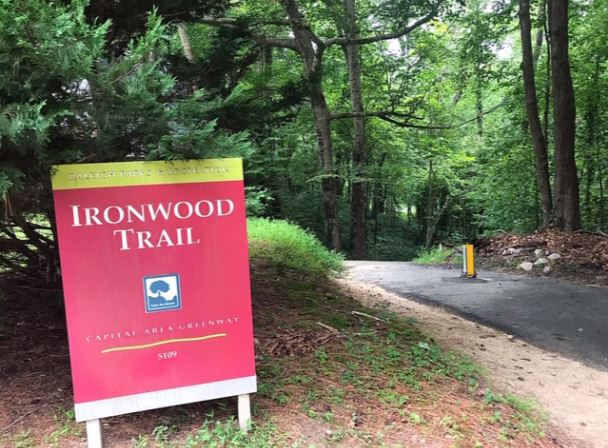
Laurie’s favorite part of earning her certification was working with the City of Raleigh Teen Outreach Program (TOPS) to complete her community partnership project. She worked with young people in the TOPS program and their counselors to paint murals of North Carolina native butterflies on the concrete sewer risers along a section of the Greenway trail south of Shelley Lake. Laurie’s project was featured on an ABC Channel 11 news broadcast, “Citizen-led public art project turns sewer risers on Raleigh greenway into a canvas.”

“I was surprised to hear so many positive comments from Greenway users, saying that they enjoyed and appreciated the nature art in this much-used space. I was glad to help arrange a project that benefited the young artists, many of whom had not been aware of the greenways before, and that helped beautify and provide nature awareness for a range of greenway users for years to come! Her project helped the teens spend meaningful time outdoors learning about native species, beautified outdoor structures along a well-visited corridor, and educated the public about some of the butterflies they may glimpse while using the Greenway.


Laurie says that one experience that stood out for her was from a bird identification program. Over a period of about four hours, her group identified approximately 50 species of bird within Durant Nature Preserve. “It was an amazing experience for me because about half of those species were migratory ones I'd never seen before. It was a special experience to bond with others who were equally excited about exploring nature, and the first time I officially went birding."

After completing the certification program, Laurie says she is much more aware of the components of effective environmental education. “I know that environmental education goes beyond sharing information, and that it can ideally lead to changes in participants’ attitudes and empower people with the skills to make changes. It provided me with so many ideas to make lessons effective for different audiences!”

Monday, June 8, 2020

Teacher at Central Park School for Children in Durham Completes the NC Environmental Education Certification Program


Anna Morrison, a first-grade teacher at Central Park School for Children in Durham, recently completed the NC Environmental Education Certification Program.

Central Park is a project-based school and Anna enjoys integrating the environment into the students’ projects. She has completed several projects with students on topics such as trees and forest animals with the help of park rangers from Jordan Lake State Recreation Area, Eno River State Park and from staff at Piedmont Wildlife Center. Students also completed a farm project and visited local farms including Woodcrest Farm in Hillsborough. “I am passionate about taking my students outside five or more times a day to explore, walk, play, learn, observe and garden! I also love to integrate mindfulness into the classroom and outside with my first graders.”

Anna is also passionate about equity and diversity in and out of the classroom and believes environmental education has a huge role to play in it. She was fortunate to partner with Village of Wisdom [villageofwisdom.org] this school year and be a part of a Black Genius [blackgenius.com] pilot program at Central Park School for Children. This program is aimed at elevating and nurturing Black student’s talents, intellect, and creativity instead of negating them. She says, “Learning to see and know my Black students’ interests better and plug into them inside the classroom or outside has been crucial to connecting to and elevating them.”

For her community partnership project Anna organized a farmer's market in front of the school. This was culminating event at the close of her first-grade students’ farm project. She invited local farmers that the students had visited as well as local businesses that could benefit from this partnership. “We asked school families that had gardens to contribute any produce they had, and our class was able to share it with our school's students and families. It was a wonderful event and celebration as we shared our love of farms with our school community and introduced them to local farmers and businesses. My students were overjoyed to stand behind tables and sell produce and help support local farmers. What a beautiful way to support our environment!”

Anna says that the Methods of Teaching Environmental Education stood out for her because she was able to take it with her husband Scott Morrison, an Associate Professor of Education at Elon University who is also working on his certification. They both share an interest in getting kids outdoors.   
                                               

Anna says she wishes more classroom teachers took advantage of this certification as well as the workshops and classes. “I have been inspired in my trainings and try to transfer bits and pieces of what I have learned along the way with this certification with my first graders. This may come out in the way of teaching them to make a nature journal on Instagram during the pandemic or a lesson from Flying Wild during a bird project. The more I learn and spend time in nature, the more I want to share with my students.

Anna says the certification program helped inspire her to start a walking curriculum with her students this past year which got them outdoors every day at 9:00 a.m. for a walk- rain or shine! “My favorite walk was when one of my students noticed a big bird at the top of an oak tree on the big loop. We all gathered under to watch. It was silent as students just took in the sight of a really big bird right up above. We were VERY still as to not disturb the bird. We were all captivated. Turns out it was a hawk. What a discovery! Every day, we felt like explorers!”

Anna hopes that more classroom teachers will pursue their environmental education certification. “Our students need this! Students need to be outside and learning about our environment! The materials from Project Learning Tree, Project Wet, Aquatic Wild, Flying Wild and many others have been incredible resources for me as a classroom teacher. I am so grateful to walk alongside other NC Environmental Educators and share with others my love of nature and care for protecting our environment.”


Friday, May 22, 2020

Mecklenburg County Educator Cassie Skrutowski Completes Her N.C. Environmental Education Certification


Cassie Skrutowski, an educator at Reedy Creek Nature Center in Charlotte and at Anne Springs Close Greenway in Fort Mill, recently completed the NC Environmental Education Certification.

Cassie develops and teaches environmental education programs to school groups on field trips and provides programs to the public. She works with all age groups but her main audience is elementary-aged students. In her free time, she enjoys hiking, kayaking and nature art.


Cassie says the instructional workshops were her favorite part of the program because of the curriculum guides she received. “The guidebooks have many environmental activities in them that are extremely useful for educators. These workshops were always well put together and allowed us to explore ways we could teach the activities for varying age groups and locations. Playful Pedagogy was a workshop that stood out to me because the activities were all about letting children play and learn through play, which was such an interesting concept for me to learn about.”

For her community partnership project, Cassie created lesson plans for local preschools based on age-appropriate books about animals. She also brought nature center animals for the students to touch and learn about including hermit crabs, starfish and a yellow-bellied slider. The preschools will be able to use the lesson plans in the future and hopefully continue to incorporate environmental content into their learning.

Cassie says the certification changed her approach to teaching in several ways. “I learned about the NC school standards and how lesson plans should be in accordance with those standards for field trips. I also learned that as an environmental educator, my focus during teaching should be to give all the facts, and let my students draw their own conclusions. We, as educators, should not "force" our opinions on anyone, or try to lead them to conclusions that we personally believe are correct. I try my best now to be unbiased while teaching, and to provide all sides of any issue I speak about.”

Through the program, Cassie says she also changed her view of environmental issues. “I learned about many new environmental issues that I was not knowledgeable on prior to the workshops I took. I try to think more proactively about environmental issues, and what I can do at home and work to help.”

Thursday, May 21, 2020

Maya Revell, A Wake Forest University Graduate Student Completes Her Environmental Education Certification


Maya Revell is a graduate student in the Master of Arts in Sustainability program at Wake Forest University. Through this interdisciplinary program, she is exploring the intersections of education, environment, and equity. Maya is also a Fellow with the Z. Smith Reynolds Foundation, a private foundation with a mission of improving the quality of live for North Carolina residents.

Maya says her favorite part of earning the Environmental Education Certification was making connections with the environmental education community across the state while learning about how to be an effective educator. “Of all the amazing experiences I had, the certification experience that stands out to me is my teaching experience with the Haw River Assembly during their annual Learning Celebration. This celebration took place over a span of three weeks, and I had the opportunity to empower young students and provide them with tools to protect their local waterways. Also, this was my first experience teaching with the Stormwater SMART Program through the Piedmont Triad Regional Council which makes it even more memorable!”


For her community partnership project, Maya organized the first Bio Blitz at Cates Farm Park with the City of Mebane, NC for Alamance County Creek Week. Maya’s project had a positive impact on the community. “Community residents were able to come to the park and engage with community entities such as NC Wildlife Resources Commission, Elon University and Haw River Assembly. During the event, families got to participate in citizen science activities, learn how to identify macroinvertebrates, and take inventory of the native plants and animals along Mill Creek in Alamance County. After the event, we were able to upload the species that were identified so that others could view their findings.”

Maya says the certification program provided her with strategies to engage younger learners in an effective way.  “As someone who had worked more in educating 8th graders and peers in college, I did not have much experience in how to effectively teach students in grades K-5. The certification program showed me the importance of play-based learning for children.”


While Maya doesn’t think the program changed the way she thinks about environmental issues, she says it has shown her the value that education has in guiding others to make sustainable choices for the environment. “Because of the systemic and interconnected nature of many societal problems, this certification program has aided me in developing curriculum and teaching about the environment in a way that demonstrates this interconnectedness to students.”

Tuesday, May 19, 2020

NC State University Science Education PhD Student, Emma Refvem Completes Her N.C. Environmental Education Certification


Emma Refvem a graduate student, working toward a PhD in Science Education at NC State University completed the state’s Environmental Education Certification program this week. Emma is a research assistant for Dr. Gail Jones and is researching how family science experiences influence career choice and why people are motivated to choose science teaching as a career.

Before pursuing her graduate degree, Emma worked for eight years at Riverside High School in Durham as an Earth/Environmental Science teacher and spent a summer serving as the naturalist at the Eno River State Park. She currently serves on the Teacher Advisory Committee for the NC Energy Literacy Fellows. “My teaching passions include incorporating technology into science lessons, organizing large groups of people with spreadsheets, and capitalizing on the joy and genius of high school students.”

One experience that stands out for Emma during her certification was a Box Turtle class at Medoc Mountain State Park in which she found and marked box turtles around the park. “I had never been given an opportunity to participate in that kind of field science and especially didn't feel confident I would know how to find a turtle. But I found one! It was a lot of fun to work on that team throughout the morning.”


For her community partnership project, Emma worked with the National Honor Society students at Riverside High School to develop and plan a service event for their club this spring. They decided to plant a pollinator garden on the area of Riverside that is used by the Occupational Course of Study (OCS) program, a course of study for students with disabilities who intend to go directly into employment upon graduating high school, for their fall and spring plant sales. “I applied for a grant through Monarch Watch and received a flat of milkweed plants for our garden. COVID-19 interrupted our initial plans for a large plant day, but a small garden with a donated insect hotel was still able to be planted. The honor students were able to gain service hours and learn how to plan a garden and the OCS students will be able to observe the monarch butterflies that come to their new habitat.”

Emma says that as a formal educator, she was very uncomfortable with informal science education at first. She didn't know what to do with non-captive willing adults who just wanted to learn for the sake of learning but instead was more familiar working within a curriculum and learning to spark excitement and wonder in all types of students. “I have since learned to see how to capitalize on the willingness of the people who come to informal settings to learn, and have seen the importance on creating amazing spaces for families and people of all ages to enjoy and learn from nature. It helped my formal education to remember that figuring out how to incorporate outdoor learning and activities that capitalize on our local environment can only help these students by getting them excited and engaged.”


Emma says she has developed a deeper understanding of how to approach different types of learners, which helps her to think about the best ways to communicate to people about the importance of protecting our environment. “Figuring out how to approach and overcome barriers that different people may have to certain areas of environmental science (like climate science, for example) has helped me to think more critically about environmental education initiatives, and now that I am in the role of a researcher, it helps me analyze research on how people approach environmental education more critically.”


Wilkes County Educator Kayla Mounce Completes Her N.C. Environmental Education Certification

Kayla Mounce recently completed her Environmental Education Certification. Kayla is a Natural Resource Conservationist at Wilkes Soil and Water Conservation District. She works with the education program and writes conservation plans for farms that receive state cost-share funds. She also teaches a GIS (Geographic Information Systems) Course at Appalachian State University and loves to hike in her free time.


Kaya says that the Growing Up WILD workshop at Grandfather Mountain was her favorite environmental education experience. “My mom is a Pre-K teacher, so I have had fun implementing some of those lessons with her class, even during the time of online learning due to COVID-19.” Kayla enjoyed the instructional workshops and receiving curriculum guides that she could use as resources for teaching.

For her community partnership project, Kayla was able to coordinate a regional invitation land judging competition for high school FFA (Future Farmers of America) teams. Kayla was very active in FFA in high school and land judging had a positive impact on her career, so she wanted to make an impact in her community by hosting the event. She says that the number of events was declining because of the challenging content and soil science it entails. “Because of the decrease in participation in recent years, there was not a regional competition before my project. I wanted to give students exposure to how the contest worked before competing at the state event. I was glad to see this event bring out new teams and I hope to make it an annual event. It even led to conversation and planning for an advisor training.”


Kayla says that the certification program has helped her in several ways. “I am definitely more aware of teaching methods and ways to address student questions and lead group discussions. I also write grants for my organization so learning how to write objectives in the Methods of Teaching Environmental Education workshop has been extremely helpful. I like to teach in a way that allows students to come to their own conclusions and I have learned a lot more about the importance of particular wildlife, such as salamanders.”

Tuesday, April 21, 2020

NC DEQ Secretary Regan Hosts Conversations with Environmental Educators for Earth Day's 50th

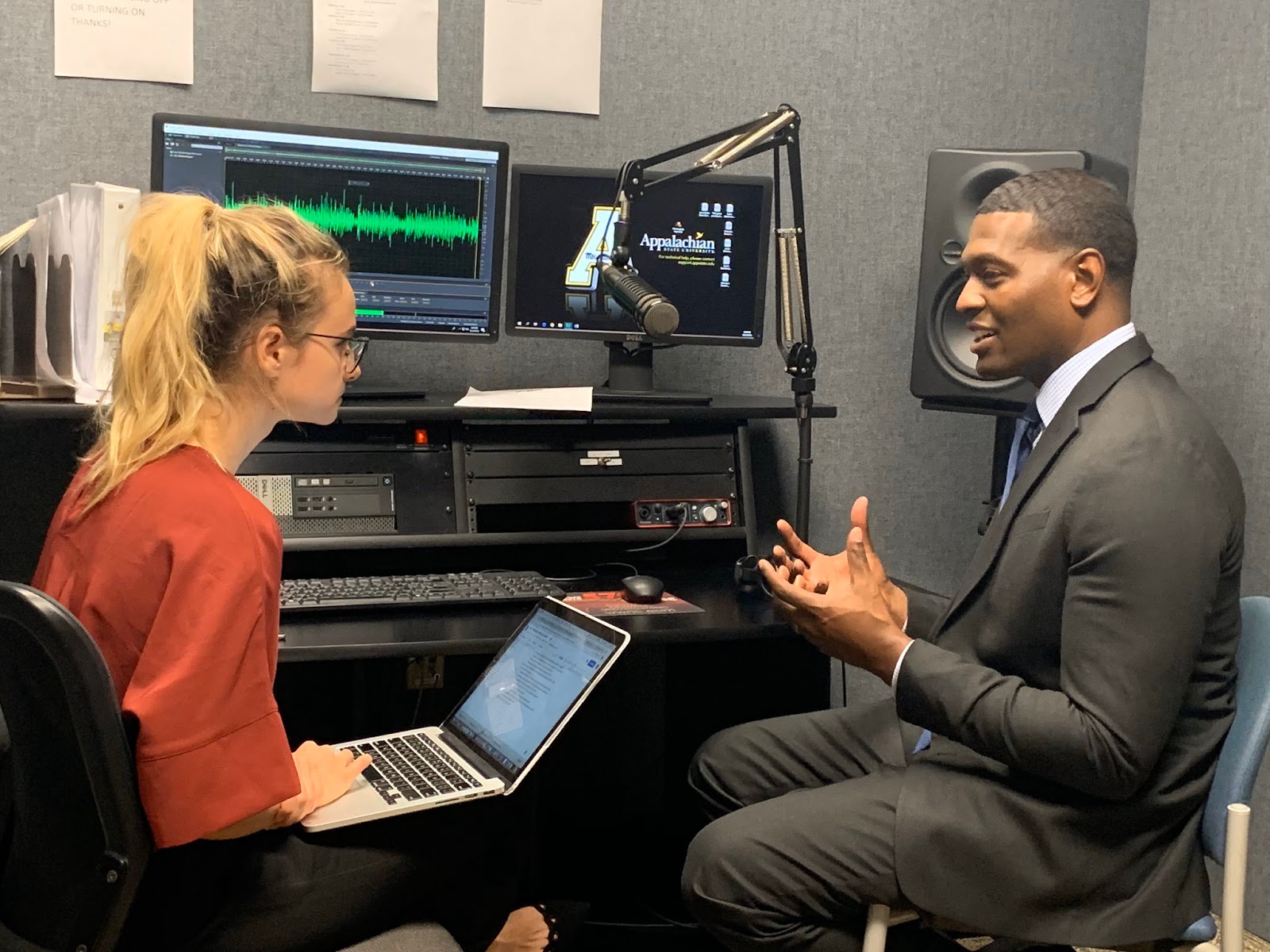
We are in a time of stay-at-home orders and remote working, but North Carolina Department of Environmental Quality Secretary Michael Regan still found a way to interview certified environmental educators for a series commemorating the 50th Anniversary of Earth Day.
These online visits with three recently certified educators recognize the work of environmental educators across the state and raise awareness of the certification program, which is administered by the North Carolina Office of Environmental Education and Public Affairs within the department.


Secretary Regan asks Libbie Dobbs-Alexander, ecoEXPLORE Coordinator at the North Carolina Arboretum, how the EE Certification Program helped her career and provided service to her community and beyond.

Ballentine Elementary Academic Enrichment Teacher Kathy Wall tells Secretary Regan why she as a classroom teacher pursued environmental education certification and how it has helped her leverage programs and resources, like Shad in the Classroom.

DEQ Secretary Michael S Regan congratulates Michael Romano of Greensboro Parks and Recreation for completing the NC Environmental Educator Certification program and they discuss his work and community project.
In addition to these videos, the N.C. Department of Environmental Quality's Earth Day page features essays from environmental educators and leaders in our state. I hope you will take a moment to celebrate Earth Day with these inspiring words from environmental educators and leaders in North Carolina: https://deq.nc.gov/outreach-education/earth-day-2020


For Earth Day 50 - Climate Change Professional Development From PLT, Project WET and the National Wildlife Federation

Available for a limited time on the North American Association for Environmental Education eePRO! 

Project Wet, Project Wild, and NWF have co-created a free, self-paced virtual course focused on climate change, biodiversity and wildlife. Upon completion of the course, participants receive free lessons from Project Wet and Project Wild as well as other teaching materials. The workshop is free and grants a 3-hour credit certificate upon completion.


In honor of the 50th Anniversary of Earth Day and in light of the COVID-19 social distancing and stay-at-home directives, the N.C. Office of Environmental Education and Public Affairs is accepting this workshop for Criteria I credit for those enrolled in the North Carolina Environmental Education Certification Program. It can still be used as Continuing Education and Criteria III credit as well, if needed. Don't delay, the workshop ends on June 1, 2020.


Register:
 https://naaee.org/eepro/learning/online-courses/earth-day-50-climate-change-professional


Thursday, April 2, 2020

Celebrate the 50th Anniversary of Earth Day in NC

Right now, all North Carolinians are concerned about health, safety and economic well-being as we weather the challenges of the current state of emergency.

Many of our celebrations and activities in recognition of the 50th anniversary of Earth Day have been canceled, so the Office of Environmental Education and Public Affairs has decided to celebrate our state’s environmental educators online. We plan to highlight educators and the nature we can find in our own backyard throughout the month of April and on Earth Day, April 22.

Leading up to Earth Day, we will be encouraging educators, parents, caregivers and students to post photos of their backyard nature using common hashtags and mentioning @northcarolinaee in Twitter, Facebook and Instagram posts. We also encourage you to do a shout out to your favorite environmental educators and teachers in North Carolina.

We hope this will encourage everyone who is able to get outdoors and it will allow us to come together online as a community to celebrate the incredible natural resources and environmental educators in North Carolina. In your outdoor adventures, we encourage you to maintain safe practices, social distancing and to follow all state and local COVID-19 directives.

When posting to Twitter, Facebook or Instagram, please use the following hashtags: #NCEarthDay50, #NCBackyardNature and #NCEnviroEducators and feel free to use the image above.

Please join us in recognizing the educators and natural resources that make our state so unique.

Friday, November 22, 2019

Educator Spotlight: Meredith Fish

Meredith Fish, an educator for the North Carolina Aquarium at Jennette’s Pier, recently completed her Environmental Education Certification. Meredith instructs several outdoor summer camps, fishing classes, school field trips and outreach programs.


Meredith created a “Drone Exploration Program” to bring STEM education to classrooms in northeastern North Carolina for her community partnership project. She received a grant through Dominion Energy and traveled with Jennette’s Pier to middle schools to teach kids what drones are, how they work and how they are used within the realm of environmental science.

“Most kids probably think that drones are just cool toys, but this program will teach them the various ways that drones can be used in the environmental research and conservation fields, which will help inspire potential future careers in these young bright students,” said Meredith. “The northeastern North Carolina community that I will be reaching is very rural and is typically underrepresented when it comes to educational opportunities such as this. Upon completion of this project, this drone exploration program will be added to the list of programs offered through Jennette’s Pier.”


Meredith says the program helped her see the environment through a kid’s eyes and allowed her to travel the state visiting environmental education centers. “I learned to teach different audiences about a wide variety of topics.”


Wednesday, November 13, 2019

Secretary Regan Presents UNCG Doctoral Student with Environmental Education Certification


North Carolina Department of Environmental Quality Secretary Michael Regan made a visit to UNC Greensboro on November 12 to award Ti’Era Worsley her North Carolina Environmental Education Certificate and to visit with faculty.

Ti’Era is a doctoral student in the Department of Teacher Education and Higher Education at UNCG. She researches informal science education with middle school youth and STEM. Ti’Era’s current research interest include looking at social interactions among African American youth and how it affects their quality of work. She focuses on STEM education but has a passion for environmental education and for working with minoritized youth. She likes working with this specific population because it gives them an opportunity to engage in STEM in ways that are culturally relevant to them.
Ti’Era’s community partnership project was working with a cultural/Spanish immersion program to host a professional development workshop that focused on outdoor education. They wanted ideas on activities that would support their curriculum and show them how to use the resources they have access to within their space. The teachers and assistants were interested in outdoor education but were unsure how to implement it into their curriculum. She was able to share resources and create a google drive that provided them environmental education activities in Spanish.


Ti’Era says she naturally takes a community-based approach to teaching and believes in co-creating and co-planning. “The EE Certification program has provided me the content knowledge to help bridge the gap of people's perspectives about environmental education and building environmental literacy. After participating in the certification program, I think about environmental issues with a diverse mindset. I understand that different people have very different connections to the outdoors and what may be pressing to some is not very pressing to others. I have become better at understanding the importance of the outdoors from different perspectives.”

Friday, November 1, 2019

Secretary Regan Visits Environmental Education Class at Appalachian State University


North Carolina Department of Environmental Quality (DEQ) Secretary Michael Regan visited Tom Randolph’s environmental education class at Appalachian State University last week to talk about climate change, and how North Carolina is working to mitigate the impact, including supporting the transition to clean energy.

Randolph is a North Carolina Certified Environmental Educator through the DEQ administered program and serves as the Lead Education Ranger at Mt. Jefferson State Natural Area, a part of the North Carolina State Parks system located in West Jefferson in Ashe County. He is also an adjunct professor of interpretive methods at ASU where he teaches the class in environmental education.


Secretary Regan presenting student Project WET certificate

Secretary Regan enjoyed hearing from students and was able to hand out certificates to students for completing their Project WET (Water Education for Teachers) Workshop, a national environmental education curriculum that is managed on the state level by the department. Students were interested in learning more about how they can engage the university, the local community and beyond to implement sustainable practices.


“It was such an honor to come to Appalachian State University and speak to a class of environmental education students who are passionate about the environment and looking for ways to protect what makes North Carolina special,” said Secretary Michael S. Regan. “The students raised some challenging questions about climate change and its impacts, but they also are actively engaged in being part of the solution.”


Thursday, October 24, 2019

Secretary Regan Presents UNCA Student with Environmental Education Certification


N.C. Department of Environmental Quality Secretary Michael S. Regan presents the Environmental Education Certificate to UNC Asheville student Emily Avery, as Chancellor Nancy J. Cable (right) and Provost Kai Campbell (left) look on.

Secretary Michael Regan visited the campus of the University of North Carolina Asheville this week to meet university officials and present Emily Avery with the department’s environmental education certification. Avery is a graduate student in environmental studies pursuing her teaching license to become a middle school science teacher.

She began the certification program while working as a seasonal naturalist at Chimney Rock State Park where she discovered her interest in environmental education. “That’s where I discovered my passion for science, nature and environmental education,” said Avery. “I quickly realized I wanted my full-time career to be in science education, which led me to pursue the teacher licensure program at UNCA.”

Avery says the program helped her discover the importance of environmental stewardship, hands-on learning and ways to bring the environment into the classroom. She plans to use her knowledge of environmental education in her future middle school science classroom. “When students have more opportunities for experiential learning it creates a deeper thinking and application of knowledge that can be used in the real world.”

For her community partnership project required for the certification, Avery worked with Asheville Middle School and The North Carolina Arboretum’s ecoEXPLORE program to create and teach environmental education lessons for the school's In Real Life after-school program. Through these activities, the students learned about the species that live in their own schoolyard and ways to observe and identify different species. Avery says that she will use the certification as a middle school teacher. “I will use what I learned from the certification program to become a better science educator and to share the importance of environmental stewardship with the community.”

From left, Nancy Ruppert and Evan Couzo of UNC Asheville’s education faculty, students Emily Avery and Julie Neumark, alum Amy Kinsella, and Alison Ormsby of the environmental studies faculty
Regan was joined for the recognition ceremony by UNC Asheville Chancellor Dr. Nancy Cable and Dr. Garikai Campbell, Provost and Vice Chancellor for Academic Affairs. Also in attendance were certified environmental educators Alison Ormsby, an adjunct instructor of environmental studies and humanities at the university and Amy Kinsella, a UNC Asheville environmental studies graduate who is an education ranger at Holmes Educational State Forest in Hendersonville. Julie Neumark, an environmental studies student currently working on her environmental education certification also attended the recognition and had the opportunity to meet the secretary as she looks forward to completing the program herself.

Tuesday, September 17, 2019

Educator Spotlight: Amy Eldredge


Congratulations to Amy Eldredge on completing her N.C. Environmental Education Certification. Eldredge currently is the Maui Program Associate with the Marine Sanctuary Foundation in Kihei, Hawaii. She leads the volunteer program which includes recruiting, training and scheduling new volunteers, hosts professional development meetings and oversees the visitor center. 

Her favorite part of the certification process was "taking the classes from such experienced and personable educators... I honestly retook some workshops because they are fun to attend and help with the retention of material. You never know what different birds you may see each time when going on a birding program!"

For her community partnership project, Eldredge organized and presented bat workshops on Bald Head Island and surrounding areas. Working with BHI Conservancy, local organizations, and N.C. state employees, she created lectures focused on bats and local pollinators with topics ranging from native gardening to bat boxes. "Two of the three workshops included hands-on projects, which they were able to take with them. These projects included creating native seed bombs to attract pollinator species once planted and in bloom as well as constructing bat boxes to be set up around the island at predetermined locations." This project seeks to educate people on the importance of bats to local ecology and "help break the stigma that bats are bad." Eldredge's project also help the local community become involved in citizen science initiatives and increased participation in creating healthy pollinator environments. 


Through this program, Eldredge learned new teaching techniques to present environmental information in an interesting and age-appropriate way. "This program is a great way to train those not formally trained in environmental education. I learned how to apply real-world issues to a classroom in a formal and informal setting and how to share these environmental issues appropriately with various age groups."

Thursday, August 22, 2019

Educator Spotlight: Chandler Holland


Congratulations to Chandler Holland for completing the North Carolina Environmental Education Certification program. Holland is a sophomore at Warren Wilson College, where she is pursuing an Integrated Studies major and Business minor. She is also developing a community organization called Red Ridge, NC which serves to engage, educate and employ the local community through their programs and micro business opportunities.

The multi-day workshops that Holland participated in stood out as her favorite parts of the certification program. She found the "Heart-Based Environmental Education Training" at Pickards Mountain Eco-Institute particularly influential. In this workshop, Holland learned about the 8 Shields Program, which she credits with increasing her connection to nature and providing her with tools to share that connection with others. Holland also enjoyed the Certified Interpretive Guide training because "the focus on interpretation rather than education opened up an entire other part of sharing  information and creating engagement that I hadn't really thought about before."


For her community partnership project, Holland created the Saxapahaw Island Park Nature Bingo activity which uses the local flora and fauna on bingo playing cards. These cards use photographs from the trails and riverbanks of the park to encourage both children and adults to engage directly with the nature on the island." The project will enhance each visitor's experience in the park, as it encourages exploration beyond the playground and onto the many trails through the more natural areas." Additionally, participants are encouraged to share their findings on Instagram and Pinterest to increase the reach of the project and catalog findings.

The certification program provided Holland with a structure to further develop her teaching experiences and taught her different forms of teaching. "Though I have been a non-formal educator since I was 10 years old, I had never really been given a structure to form my teaching experiences around. Through the certification program, I have been given access to multiple formats to mold and combine into what I need and they are invaluable resources into developing my approach to teaching."


Tuesday, August 13, 2019

Educator Spotlight: Erin Crouse


Erin Crouse recently earned her North Carolina Environmental Education Certification. Crouse is a conservation manager with The Conservation Fund, working on community projects that focus on conservation and economic development. Through this role, she leads environmental education programs that connect people to local agriculture at Good Hope Farm

When asked about her favorite part of the program, Crouse said that she enjoyed learning more about North Carolina flora and fauna and connecting with other educators through the courses. In particular, she enjoyed teaching third graders about vermicomposting and pollinators, putting the skills she learned to practice. 

For her community partnership project, Crouse created a native plant arbor at the Merriwood Apartments' community garden in Cary. She worked with the Town of Cary and property management at the apartment complex to identify a high impact project. The garden is a new project between the partners and the arbor brought an integral educational component. Crouse also worked with Boy Scouts and Cary Teen Council members to construct the arbor. "The arbor build raises awareness of the importance of pollinators to our environment and allows Merriwood residents to learn more about the native plants that support pollinators. It also increases knowledge of how pollination works, and how pollinator species pollinate crops in the garden, helping grow food."


Crouse also found that, as she spends more time out in the field, she better understands "the complexity of the issues we face with our environment, and that there is not one solution, but many people working together." She also found that the certification program increased her confidence as an educator. "I'm now more relaxed in a teaching setting and am better able to handle questions that come my way."

Monday, August 12, 2019

Educator Spotlight: Bruce Young


Congratulations to Bruce Young on completing the North Carolina Environmental Education Certification Program. Young is a board member for the Virginia Association for Environmental Education, the Virginia state affiliate of the North American Association for Environmental Education.

Young currently serves as director-at-large for the association and chairs the association’s communications and outreach action team, serves as co-chair for their 2020 conference and represents the association on the Virginia Environmental Education Certification Advisory Board.

In his free time, Young designs costumes and props for local community theater productions and is a volunteer with the Rivanna Conservation Alliance providing instruction during field trips with local school groups. He also enjoys exploring Virginia’s local parks and nature centers such as Shenandoah National Park with his camera, binoculars and field guides.

When asked about his favorite part of earning his certification, Bruce says there was so much that stood out for him. “I think that being able to attend trainings across North Carolina and explore my home state's natural and cultural history was really exciting for me. Also meeting so many wonderful people at various trainings and events was really exciting for me.”

Bruce did note two specific experiences that stood out for him during the certification process. One was a Colonial and Native American Games Workshop at Stone Mountain State Park with Brian Bockhahn, a regional education specialist with North Carolina State Parks. The other experience was a trip to the Sandhills to learn about the longleaf pine ecosystem. Young was able to see a red-cockaded woodpecker at Weymouth Woods Sandhills Nature Preserve and to view a pitch, tar, and turpentine demonstration while learning about the history of the naval store industry in North Carolina.

For Young’s community partnership project, he used the North American Association’s Environmental Education Guidelines for Professional Development to create a workshop for Virginia’s Environmental Education Certification program. Young says the workshop serves as the "kick-off" for educators interested in becoming Virginia Certified Environmental Educators and provided a baseline for best practices in environmental education. “Prior to this workshop, there was very little professional development available for non-formal educators that weren't purely curriculum or programmatic in focus. This workshop provides the tools for environmental educators at all levels to self-assess their work, programs, and teaching styles to see where they may excel or may want to explore areas of growth.”

When asked if participating in North Carolina’s certification program led to any changes in his approach to teaching, Young said it had brought his focus closer to home. “Much of my teaching is very focused now on the bioregion that I am in which previously would have focused on ecosystems or animals elsewhere. I also have increased my comfort working with early child audiences due to the various workshops like Growing Up WILD and the PLT Early Childhood Guide that have become the backbone of much of my freelance work.”

Thursday, August 8, 2019

Educator Spotlight: Ashley Meredith


Ashley Meredith just completed her N.C. Environmental Education Certification. Ashley is the program coordinator at the Durham Public Schools Hub Farm, an outdoor educational facility for the school district.

Her favorite part of earning her certification was "meeting other folks working towards their certification... I enjoyed networking with others as well as brainstorming to fix common issues that arise at our workplaces." Ashley also found the Methods of Teaching Environmental Education course to be useful since she didn't previously have any formal training in education. "It was nice to have a more formal class to learn about some childhood developmental stages as well as different techniques for teaching outdoors."

For her community partnership project, Ashley planned and hosted the Hub Farm Spring Festival on World Bee Day, an event that highlighted teachers' outdoor education projects and fun on the farm. Ashley wanted to raise awareness of the Hub Farm and the resources it offers to community members and teachers. She partnered with BOLD (Building Outdoor Learning in Durham) fellows, teachers who had won mini-grants to do outdoor education projects at their schools. She also worked with other community groups in outdoor education to provide activities like canoeing, tree climbing, and arts and crafts. "By providing space and activities for families and individuals to have positive experiences outdoors, especially younger children, we hope that we helped shape their values and attitudes regarding the outdoors."

Ashley found that the certification program impacted how she plans for lessons. "I see the value in planning and practicing lessons as well as preparing an exceptional learning environment. I also know that there is a lot of curriculum out there, so when looking for something new, I don't try to reinvent the wheel, but instead try to modify other lessons that already exist."